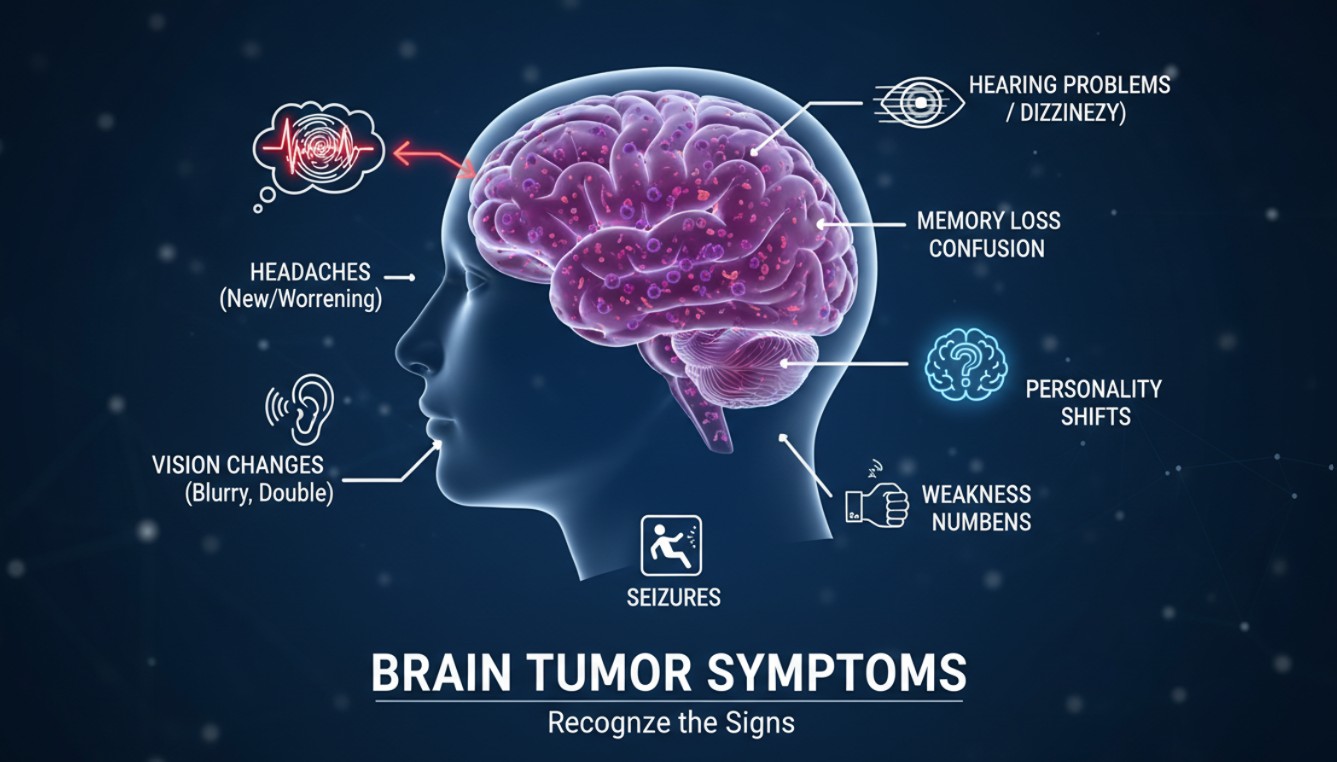

Brain tumor symptoms can vary widely from one individual to another. No two cases are exactly alike. The signs and symptoms depend on several important factors, including:
- The location of the tumor in the brain
- The size of the tumor
- How quickly it is growing
- Whether it is causing increased pressure inside the skull
- Whether it is interfering with specific areas responsible for vision, speech, memory, movement, or behavior
The brain is an incredibly complex organ. Different regions control different bodily functions, thoughts, emotions, and movements. When a tumor develops, it may interfere with these functions either directly or indirectly. Understanding brain tumor symptoms requires recognizing how tumors affect the brain and surrounding structures.
How Brain Tumors Affect the Brain
A brain tumor can cause symptoms in several ways:
1. Invasion of Brain Tissue
Some tumors grow into surrounding brain tissue and destroy cells responsible for essential functions. This may lead to:
- Vision disturbances
- Speech difficulties
- Movement problems
- Memory loss
- Personality changes
2. Pressure on Nearby Tissue
Even if a tumor does not invade tissue directly, it may press against surrounding areas. This pressure can disrupt normal brain function.
3. Increased Intracranial Pressure
The skull is a closed, rigid structure. When a tumor grows, it takes up space. This leads to increased intracranial pressure (ICP). As pressure rises, symptoms like headaches, nausea, and confusion often develop.
4. Fluid Accumulation
Tumors may block normal flow of cerebrospinal fluid (CSF), leading to fluid buildup (hydrocephalus). This significantly increases pressure inside the skull.
5. Obstruction of Cerebrospinal Fluid Circulation
CSF normally circulates through brain ventricles and around the spinal cord. A tumor may block this circulation, causing serious neurological symptoms.
Early Brain Tumor Signs and Symptoms
Symptoms may appear early or gradually develop over time. Some people notice subtle changes first, while others experience sudden and severe symptoms.
Below is a detailed explanation of the most common symptoms.
1. Headaches
Headaches are one of the most common early signs of a brain tumor.
Characteristics of Brain Tumor Headaches:
- Gradually worsen over time
- More frequent than usual
- Often worse in the morning
- May worsen when lying down or bending over
- May not improve with over-the-counter pain medications
- Often associated with nausea or vomiting
However, it is important to note that most headaches are not caused by brain tumors. Migraines and tension headaches are much more common.
2. Nausea and Vomiting
Nausea and vomiting often occur due to increased intracranial pressure.
- Frequently worse in the morning
- May occur without gastrointestinal illness
- Often associated with headache
- Vomiting may temporarily relieve pressure
Persistent nausea without a clear cause should always be evaluated.
3. Changes in Mood or Personality
The brain controls behavior, emotions, and personality. Tumors affecting the frontal lobe may cause:
- Sudden depression or anxiety
- Mood swings
- Irritability
- Withdrawal from family and friends
- Lack of motivation
- Poor judgment
- Inappropriate or uninhibited behavior
Some individuals become confused or unusually drowsy. Family members may notice personality changes before the patient does.
4. Problems with Thinking and Memory
Cognitive symptoms may include:
- Difficulty concentrating
- Trouble remembering recent events
- Slower thinking
- Trouble making decisions
- Reduced work efficiency
- Confusion
These changes may be subtle at first but progressively worsen.
5. Speech and Language Difficulties
Depending on tumor location, a person may:
- Struggle to find the right words
- Speak slowly or slur words
- Have difficulty understanding speech
- Misuse words
- Have trouble reading or writing
Tumors affecting language centers (often in the left hemisphere) commonly produce these symptoms.
6. Seizures
Seizures are a common presenting symptom of brain tumors.
They may appear as:
- Brief staring spells
- Unresponsiveness
- Sudden confusion
- Uncontrolled jerking of arms or legs
- Numbness or tingling
- Strange smells or sensations
- Convulsions
Even a single unexplained seizure requires medical evaluation.
7. Vision Changes
Vision disturbances depend on tumor location.
Possible symptoms include:
- Double vision
- Blurry vision
- Loss of peripheral (side) vision
- Difficulty seeing on one side
- Sudden vision loss
Tumors near the optic nerve or occipital lobe commonly cause visual changes.
8. Hearing and Smell Problems
Some tumors affect cranial nerves.
Symptoms may include:
- Hearing loss
- Ringing in the ears (tinnitus)
- Difficulty understanding speech
- Loss of smell
- Strange odor sensations
9. Balance and Walking Problems
The cerebellum controls coordination and balance.
Tumors in this region may cause:
- Unsteady walking
- Frequent falls
- Dizziness
- Clumsiness
- Difficulty coordinating hand movements
10. Weakness or Numbness
Tumors affecting motor or sensory areas may cause:
- Weakness in one side of the body
- Facial drooping
- Numbness or tingling
- Difficulty gripping objects
- Loss of fine motor control
These symptoms may resemble stroke.
11. Loss of Coordination
Loss of coordination may involve:
- Difficulty writing
- Trouble buttoning clothes
- Poor hand-eye coordination
- Slurred speech
12. Changes in Sensation
A tumor may affect the ability to feel:
- Heat
- Cold
- Pressure
- Light touch
- Pain
These sensory changes can be localized or widespread.
What Does a Brain Tumor Feel Like?
A brain tumor itself does not cause pain because the brain lacks pain receptors. However, the effects of pressure and tissue disruption create noticeable symptoms.
Common experiences include:
- Persistent headaches (often worse in morning)
- Pressure sensation in the head
- Mental fog or confusion
- Fatigue
- Drowsiness
- Seizures
- Balance problems
Symptoms vary depending on tumor size and location.
Conditions That Mimic Brain Tumor Symptoms
Many brain tumor symptoms overlap with other medical conditions. Having these symptoms does not automatically mean you have brain cancer.
Conditions with similar symptoms include:
1. Migraines or Chronic Headaches
Severe headaches, nausea, and vision disturbances may resemble tumor symptoms.
2. Epilepsy
Seizures without a tumor may occur due to epilepsy.
3. Stroke
Sudden weakness, numbness, or speech difficulty often suggests stroke.
4. Multiple Sclerosis (MS)
MS may cause numbness, vision problems, and coordination issues.
5. Mental Health Disorders
Depression and anxiety can cause cognitive changes and mood swings.
6. Infections
Brain infections such as meningitis or encephalitis may cause headache, fever, and confusion.
7. Neurodegenerative Disorders
Conditions like Alzheimer’s disease and Parkinson’s disease may cause memory and movement changes.
Because symptoms overlap, imaging tests are necessary for diagnosis.
Diagnostic Tests
To confirm whether a brain tumor is present, doctors may use:
MRI (Magnetic Resonance Imaging)
Most accurate imaging test for detecting brain tumors.
CT Scan
Useful for identifying bleeding or large masses.
EEG (Electroencephalogram)
Evaluates seizure activity.
Lumbar Puncture (Spinal Tap)
Used to detect infections or multiple sclerosis.
Only imaging can definitively confirm the presence of a tumor.
Brain Tumor Risk Factors
Anyone can develop a brain tumor, but certain factors increase risk.
1. Family History
Genetic conditions like neurofibromatosis increase risk.
2. Radiation Exposure
Previous radiation therapy to the head increases risk.
3. Genetic Syndromes
Certain inherited disorders increase tumor likelihood.
However, most brain tumors occur in individuals without known risk factors.
When to See a Doctor
Seek medical evaluation if you experience:
- Persistent or worsening headaches
- New or unusual seizures
- Vision or speech changes
- Personality or mood changes
- Sudden weakness or numbness
- Confusion or memory loss
- Balance difficulties
- Symptoms that return repeatedly
Immediate medical care is required if symptoms develop suddenly, especially weakness, seizures, or severe confusion.
Emergency Warning Signs
Call emergency services if someone experiences:
- First-time seizure
- Sudden severe headache (“worst headache of life”)
- Loss of consciousness
- Sudden paralysis
- Severe confusion
Importance of Early Detection
Early detection improves treatment options and outcomes. If symptoms are evaluated early:
- Tumors may be removed surgically
- Treatment may prevent permanent damage
- Complications can be minimized
Ignoring symptoms can lead to progression and worsening neurological damage.
Final Thoughts
Brain tumor symptoms vary widely and may mimic many other medical conditions. Most headaches or neurological symptoms are not caused by tumors. However, persistent, worsening, or unexplained symptoms should never be ignored.
If you notice unusual changes in:
- Thinking
- Memory
- Vision
- Speech
- Movement
- Balance
- Personality
It is important to consult a healthcare provider.
While brain tumors are serious, modern imaging techniques and treatment options have significantly improved diagnosis and survival rates.
Early evaluation saves lives.
If you or someone you know experiences new neurological symptoms, seek medical advice promptly.